


Evaluation of a fruit puree
How to Evaluate a Fruit Puree: Tasting Guide and Best Practices
Evaluating a fruit puree may seem an easy thing, but it requires a methodical approach to fully appreciate its richness and complexity. Whether for culinary use or professional tasting, understanding the different stages of evaluation and the associated best practices is essential to ensure an optimal sensory experience.
Good Tasting Practices
Prior to Tasting: Preparing Your Tasting Tool
Before diving into sensory evaluation, it is important to properly prepare your “tool”: your senses. Your olfactory and gustatory systems are highly sensitive to external influences and therefore require a suitable environment. It is recommended not to consume products that may leave a strong aftertaste (where perception persists for a long period) during the 30 minutes prior to the tasting session, such as coffee, tea, chewing gum, or tobacco. This helps prevent these products from altering your perceptions.
During the Tasting session : Follow a Logical Order
The tasting process for a fruit puree should follow a clearly defined order to prevent flavors from overlapping. Product intensity should increase gradually. For example, it is advisable to start with unsweetened products so that the sweetness of sugar does not mask the subtle characteristics of the fruit. Tasting should also begin with less acidic products, such as milder fruit purées (apple or banana), and finish with more acidic fruits like citrus fruits or passion fruit.
Another important tip: rinse your mouth with still and neutral water between the tasting of two samples to avoid the juxtaposition of sensations, which would quickly lead to saturation that diminishes perceptions.
How to describe a fruit puree
To properly evaluate a fruit puree, it is necessary to describe it using several essential sensory criteria. Below are the main elements to consider for a complete analysis.
Describing a fruit puree
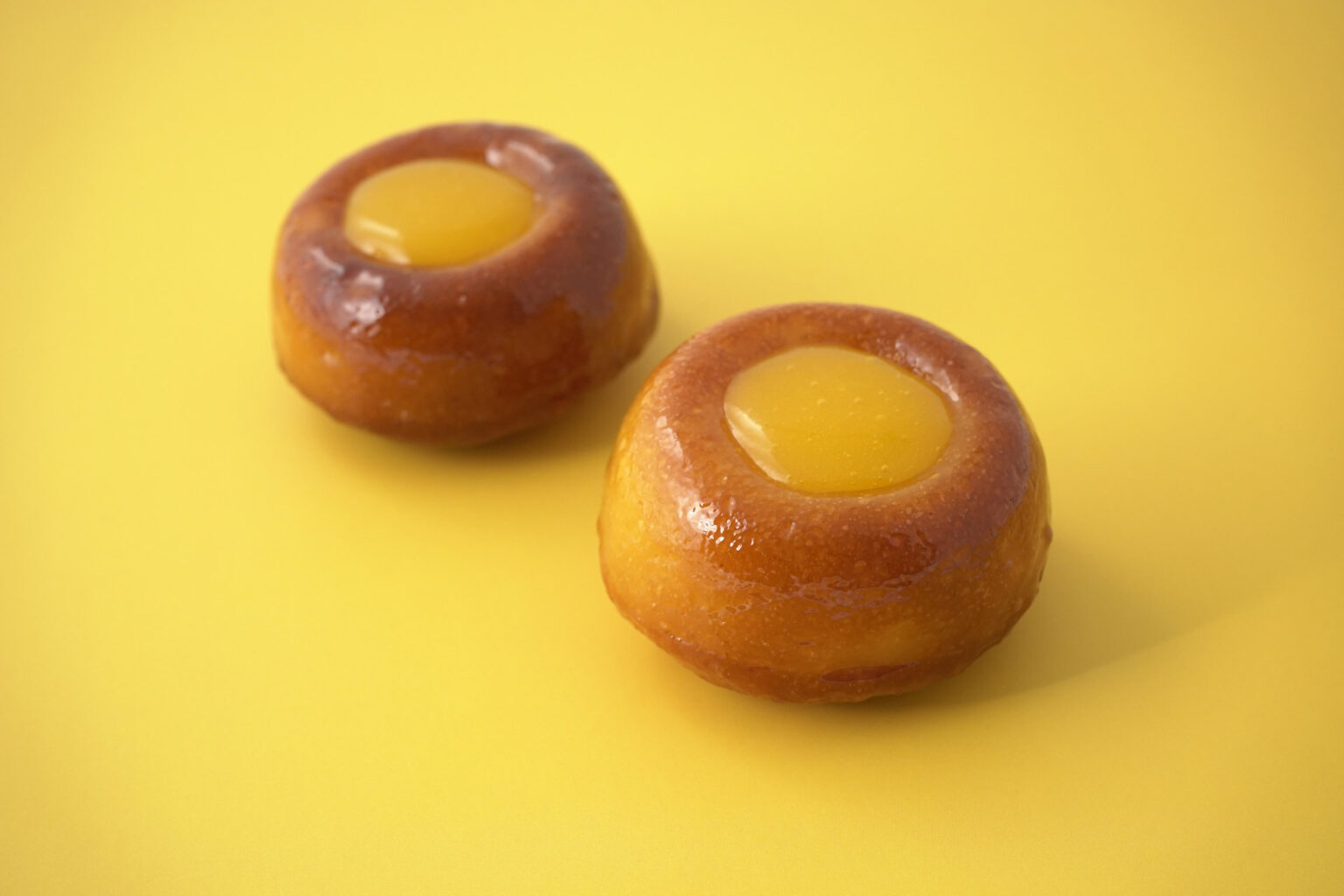
To properly evaluate a fruit purée, it is necessary to describe it using several essential sensory criteria. Here are the main elements to consider for a complete analysis.
Evaluation of appearance
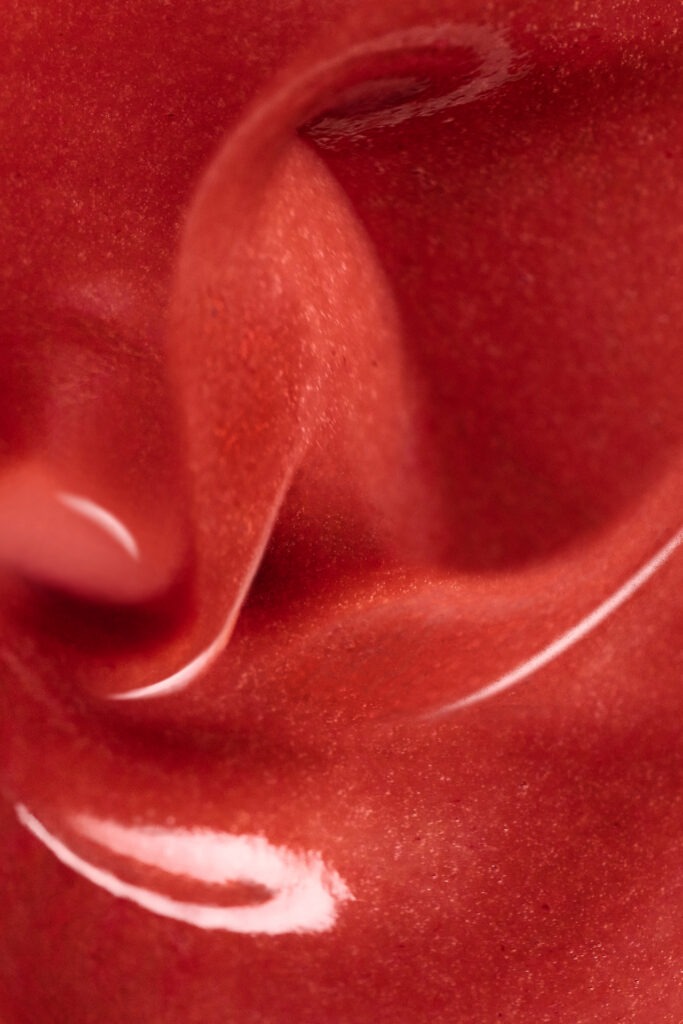
The first criterion to observe is the visual aspect of the purée. This includes color, cleanliness, aeration, and granularity. Each characteristic can provide important clues about the product’s quality and freshness.
Color: The color of a fruit puree is a primary indicator of its quality. It can vary depending on the fruit variety, but it should be uniform and intense. A well-blended purée should have a clear, luminous hue without dephasing (separation of components).
Cleanliness: During visual examination, markers—small particles that are not part of the fruit flesh or pulp—may be observed, such as pieces of skin, seeds, or achenes. While the presence of these markers does not necessarily affect the overall quality, a purée considered “clean” will be smoother and more uniform. The quantity and size of these markers determine the perceived cleanliness of the product.
Aeration and Graininess: Aeration is a quality criterion. Fruit purees can contain air bubbles produced during processing, visible on the surface. The more numerous and smaller these bubbles are, the more they create a foamy texture. Graininess reflects surface roughness: a smooth puree is creamy, while a grainy texture indicates the presence of small perceptible particles. These small irregularities do not necessarily reduce the quality of the purée but do influence its mouthfeel.

Evaluation of texture in a spoon
The texture of a fruit puree is a fundamental characteristic of the tasting experience. The viscosity, heterogeneity, and whether the purée is pulpy or syrupy largely determine the sensory perception of the product.
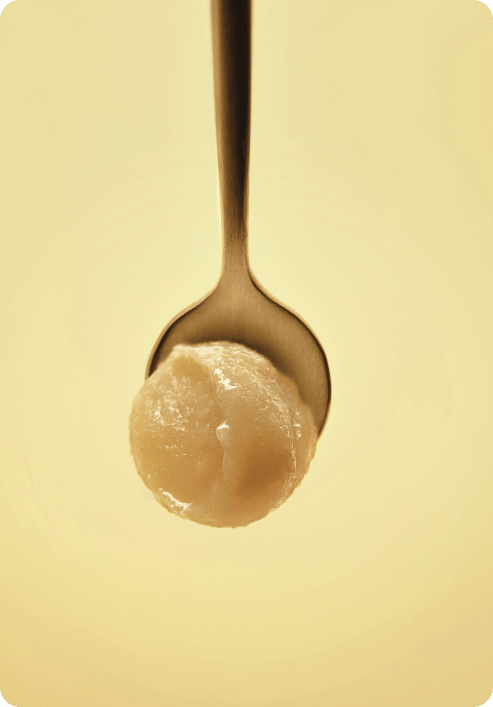
Viscosity: Viscosity determines the thickness of the puree. A thick puree will flow slowly off a spoon, while a more liquid puree will flow more easily. The thickness influences the perception of the product, particularly in culinary preparations.
Heterogeneity: A homogeneous puree has a consistent texture throughout, whereas a heterogeneous purée presents different textures within the same product, creating a pleasant contrast in the mouth.
Pulpy: Purees containing pulpy particles (e.g., citrus puree) have a denser, slightly granular texture that enhances the tasting experience.
Syrupy: Some purees may have a syrupy consistency, meaning they are concentrated liquids that flow more slowly, often due to a higher sugar content, which can also affect mouthfeel.
Evaluation of appearance
The first criterion to observe is the visual aspect of the purée. This includes color, cleanliness, aeration, and granularity. Each characteristic can provide important clues about the product’s quality and freshness.
Color: The color of a fruit puree is a primary indicator of its quality. It can vary depending on the fruit variety, but it should be uniform and intense. A well-blended purée should have a clear, luminous hue without dephasing (separation of components).
Cleanliness: During visual examination, markers—small particles that are not part of the fruit flesh or pulp—may be observed, such as pieces of skin, seeds, or achenes. While the presence of these markers does not necessarily affect the overall quality, a purée considered “clean” will be smoother and more uniform. The quantity and size of these markers determine the perceived cleanliness of the product.
Aeration and Graininess: Aeration is a quality criterion. Fruit purees can contain air bubbles produced during processing, visible on the surface. The more numerous and smaller these bubbles are, the more they create a foamy texture. Graininess reflects surface roughness: a smooth puree is creamy, while a grainy texture indicates the presence of small perceptible particles. These small irregularities do not necessarily reduce the quality of the purée but do influence its mouthfeel.
The Aroma of a Fruit Puree
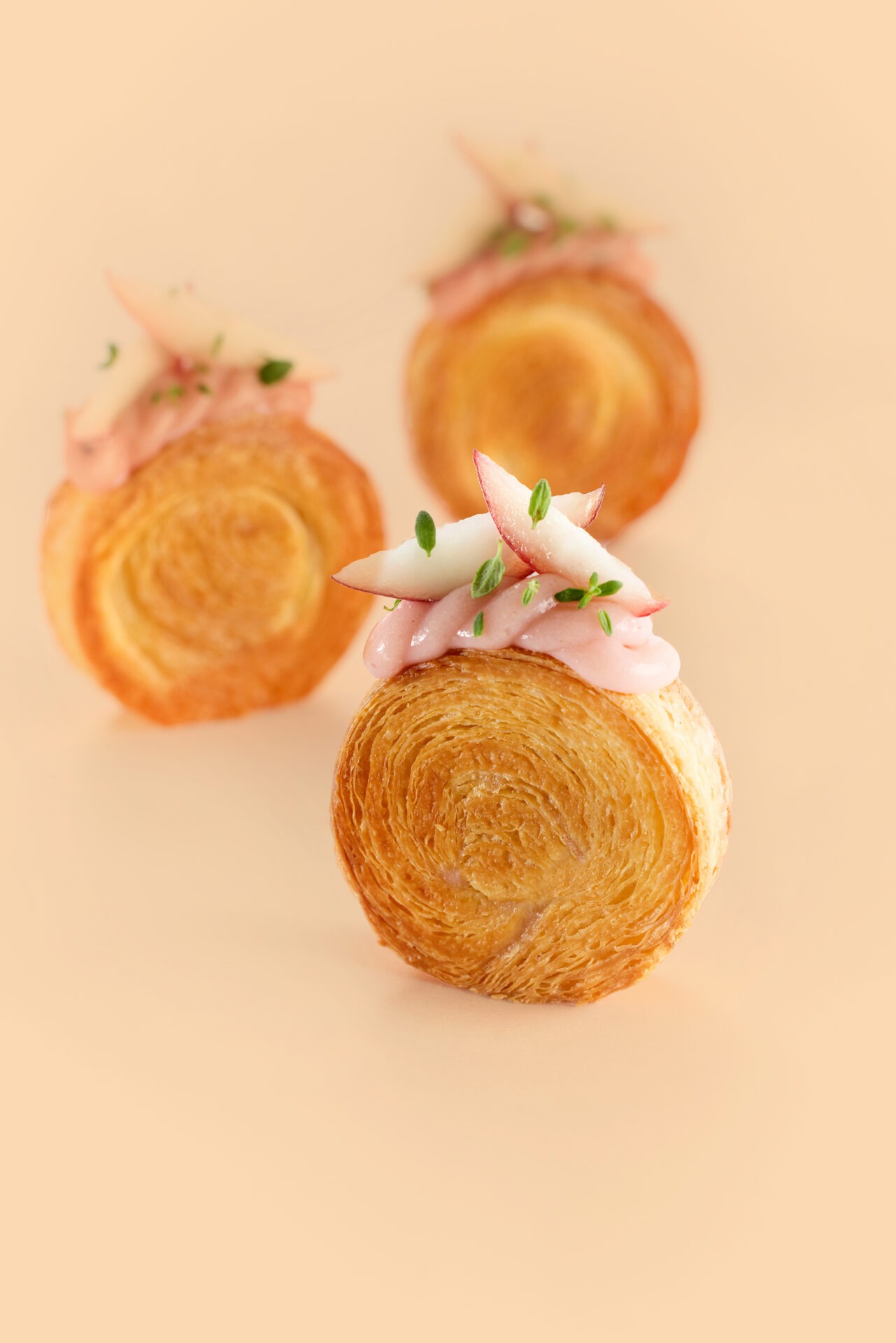
The aroma of a fruit puree plays a key role in the sensory experience. The intensity of the scent and the complexity of the perceived aromas significantly influence the perception of taste.
Intensity and Perfume: The intensity of an odor is perceived as soon as the puree is brought close to the nose. A well-prepared fruit purée releases distinct perfumes that allow the original fruit to be recognized. Both the intensity of the aroma and its character (sweet, tangy, floral, etc.) influence the overall appeal of the product.
The combination of perfume and intensity creates a sensory impression, which can be perceived as pleasant or unpleasant depending on individual interpretation, memory, or culinary associations.

Evaluation of taste
Taste is undoubtedly the most important criterion when evaluating a fruit puree. It includes fruit recognition, aromatic intensity, the basic tastes, and aftertaste (persistence in the mouth).
Fruit Recognition and Aromatic Intensity: The first question during tasting is: is the fruit immediately recognizable? The aromatic intensity of a puree can vary greatly from one product to another. Some fruits, such as strawberry or mango, may deliver a strong, intense flavor, while others, like apple, may have a milder, less pronounced taste.
Persistence and Basic Tastes: A high-quality puree exhibits persistence, meaning that the taste lingers in the mouth after swallowing. The basic tastes, such as sweet, sour, and bitter, are essential. Sugar often enhances the natural sweetness of the fruit, while acidity can add a refreshing note. The combination of aromatic intensity and persistence determines how memorable and enjoyable the tasting experience is.
Somesthetic assessment
Somesthetic sensations in the mouth refer to the tactile impressions we experience when tasting. Some purées can be lumpy (small pieces that break up under the tongue), sticky (the product sticks to the palate), or even foamy (a sensation of air bursting in the mouth). Other textures such as fibrous, grainy, or coating strongly influence the taste experience.
The Art of Tasting and Evaluating a Fruit Puree
Evaluating a fruit puree requires method and precision. By following best practices before, during, and after tasting, you can thoroughly analyze all sensory aspects of the product: its visual appearance, texture, aroma, taste, and the sensation it leaves in the mouth.
Whether for professional purposes or a simple tasting at home, mastering these steps will allow you to better appreciate the quality of a fruit puree and identify its unique characteristics. By applying these evaluation criteria, you will be able to fully savor the richness of each transformed fruit.
Now that you know how to taste a purée, discover how to describe it!