
Analysis of mango purée
An exotic fruit with incomparable flavours
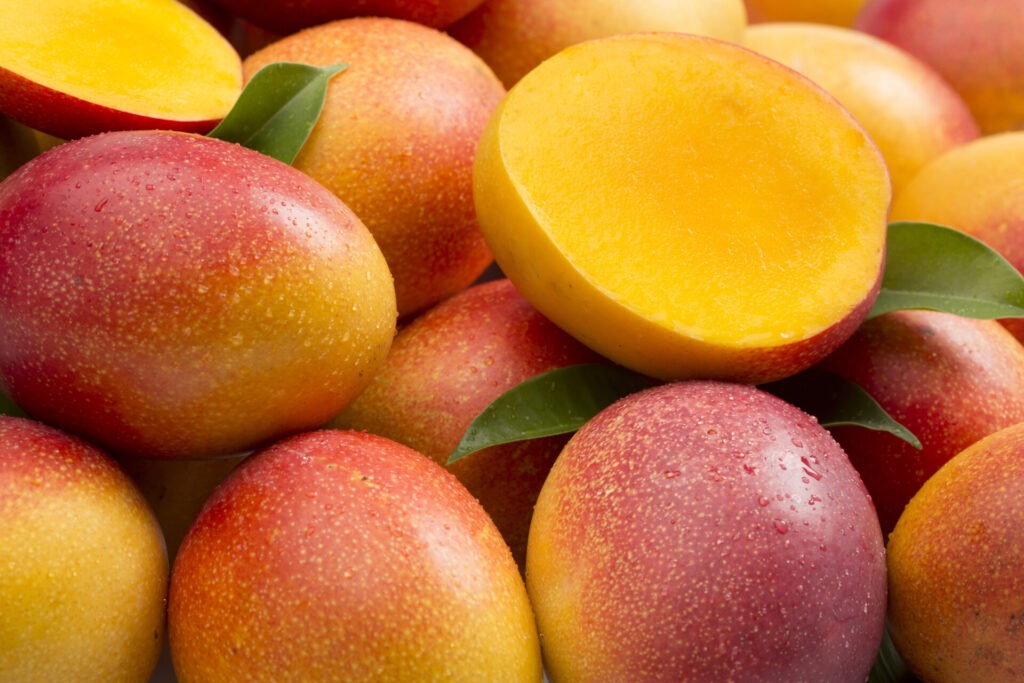
The mango, a sweet and fragrant tropical fruit, is one of the most popular fruits in the world. With over 1,000 varieties of mangoes in India, the country is by far the largest producer of mangoes, accounting for 42% of global production. But India is not alone in growing this delicious fruit. Sub-Saharan Africa (17% of global production) and Central and South America (10%) have also developed significant production areas, contributing to the diversity of flavours and organoleptic profiles of the fruit.
Mango: a fruit with exotic origins
Les vergers Boiron, specialists in fruit solutions, select high-quality mangoes sourced mainly from the west coast of India. This region enjoys ideal climatic conditions for growing exceptional varieties of mangoes: Alphonso, Kesar and Totapuri. These varieties are specifically chosen for their unique organoleptic profiles and their suitability for processing.
The mango tree: a tree with specific needs
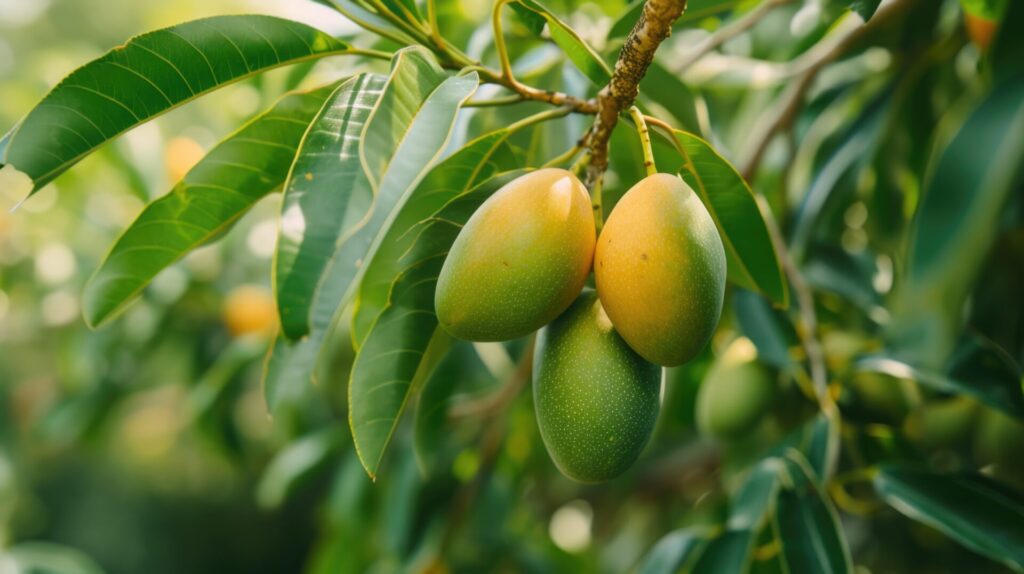
The mango tree is a subtropical tree that prefers well-drained soil and dislikes excess water. It needs temperatures between 23°C and 27°C for optimal fruit development. Mango trees are mainly irrigated during the monsoon season or using traditional irrigation systems from January to March/April.
In India, mango trees are grown in low-density plantations. A tree generally takes 3 to 5 years to produce its first fruit, but it only reaches full production after about 30 years. The mango tree’s growth cycle is long, with a period between flowering and harvesting that can last up to 120 days.
The mango growth cycle
a natural process
Each variety of mango follows its own growth cycle.
Alphonso
October to January
Fruit growth:
January to May
Harvest :
May to mid-June
Késar
January to April
Fruit growth:
April to mid-June
Harvest:
mid-June to mid-July
Totapuri
July
Mango harvesting: a precise skill
Mangoes are harvested by hand, according to strict visual criteria. The fruit is picked while still green and must be well developed, particularly the shoulder of the fruit. To avoid damaging the fruit, it is harvested using a stick fitted with a net and blades to cut the stalk, thus preventing the latex from dripping onto the mango and causing it to rot.
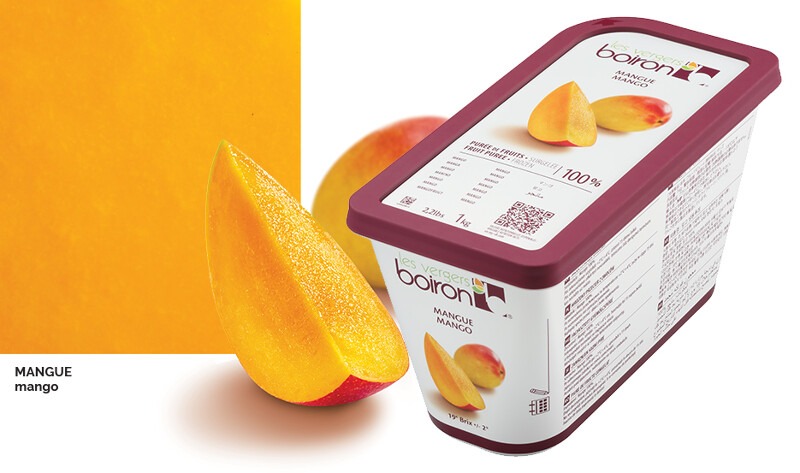

Ripening: natural or with ethylene?
Mangoes are climacteric fruits, which means they ripen thanks to ethylene, a natural gas produced by the fruit itself. At our suppliers, 70 to 75% of mangoes are ripened naturally under straw, which guarantees optimal ripeness. The remaining 25% are ripened with ethylene for faster ripening.
Natural ripening of mangoes has several advantages, including optimal control of ripeness, which guarantees superior fruit quality. However, this process takes longer and requires careful manual sorting and increased vigilance to ensure that each mango is perfectly ripe. On the other hand, ethylene ripening offers the advantage of faster ripening, resulting in a higher yield. However, this method can lead to less uniform ripeness of the fruit, requiring additional sorting to ensure the quality of the final product.
Processing: from fruit to purée
After ripening, the mangoes are carefully washed to ensure their quality. A rigorous sorting process is carried out to remove any fruit that is too immature or overripe. This sorting stage is essential to ensure that only the best quality mangoes are processed into mango purée.
Whether used in exotic cocktails, fresh desserts or savoury dishes, mango is a fruit that transports your taste buds to faraway places. Grown in ideal conditions and carefully processed, our partner’s mangoes are synonymous with quality and freshness.