Focus on Fairtrade and organic banana farming in Ecuador
Organic certification: regulated environmental practices in service of biodiversity and living ecosystems
Organic certification is based on a core principle: producing food in harmony with natural ecosystems, without the use of synthetic inputs.
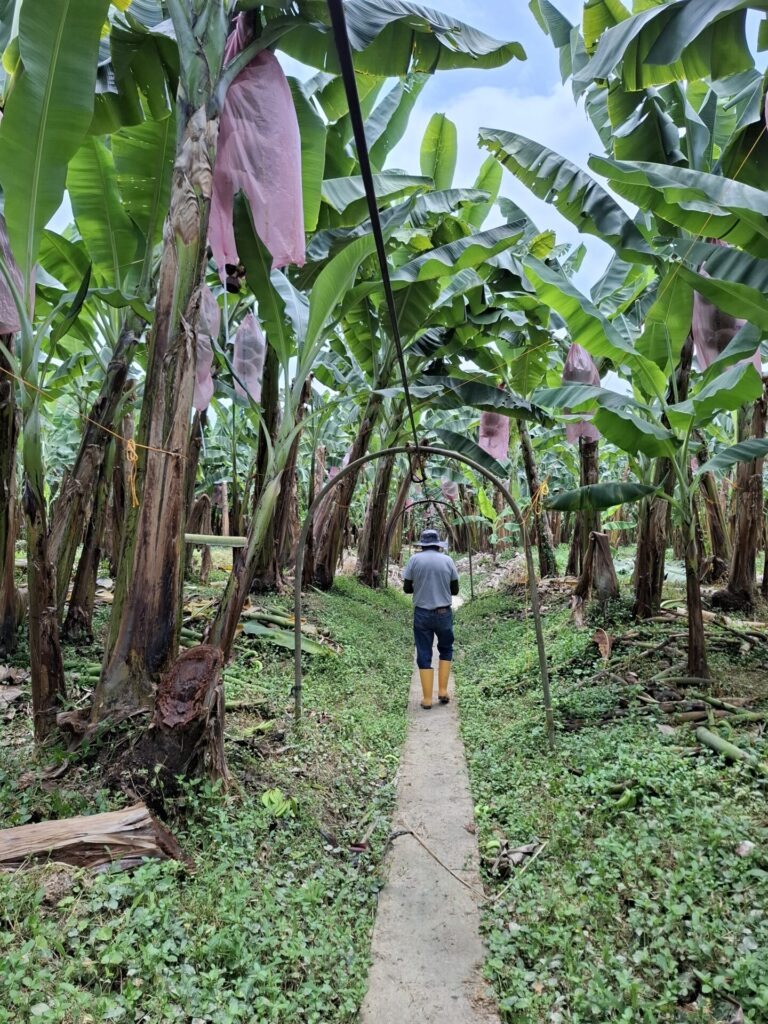
In banana plantations, this principle translates into a shift in cultivation practices. Conventional chemical treatments are replaced with natural alternatives, such as plant-based preparations or beneficial microorganisms.
Strict measures are also implemented in the field. Access to plots is carefully controlled to reduce the risk of external contamination. Robust hygiene protocols are enforced, including the regular disinfection of equipment. In addition, buffer zones are established between organic and conventional crops to prevent any drift of chemical substances.
From plantation to plate: the journey of Fairtrade organic bananas
Harvesting
1/7
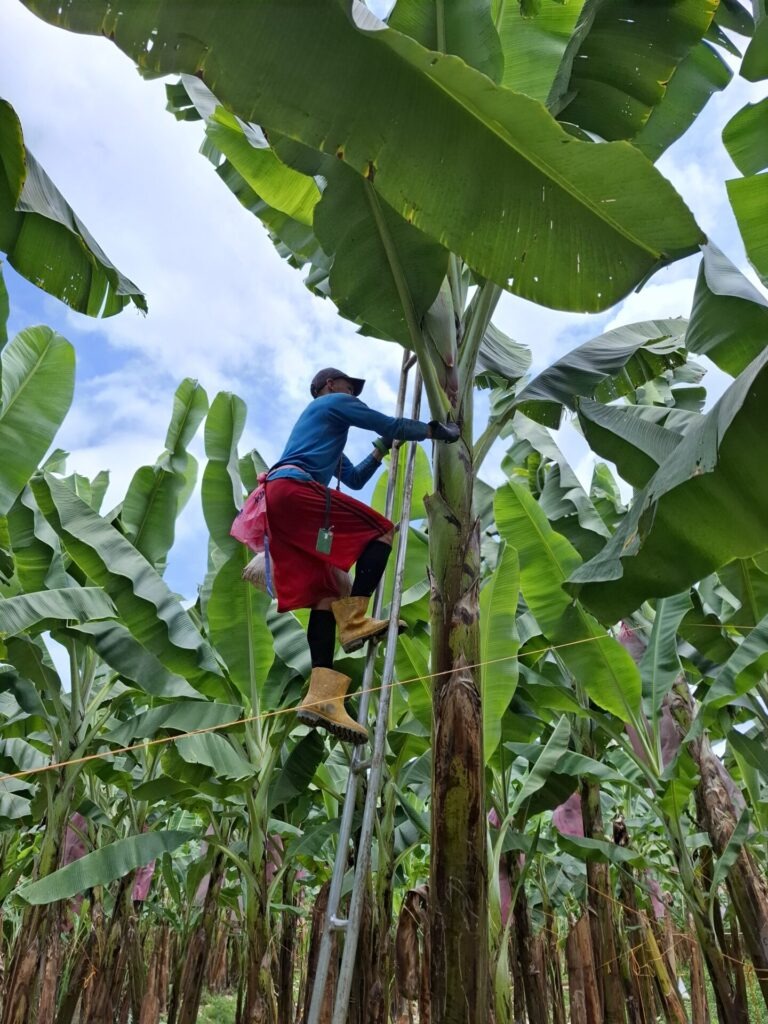
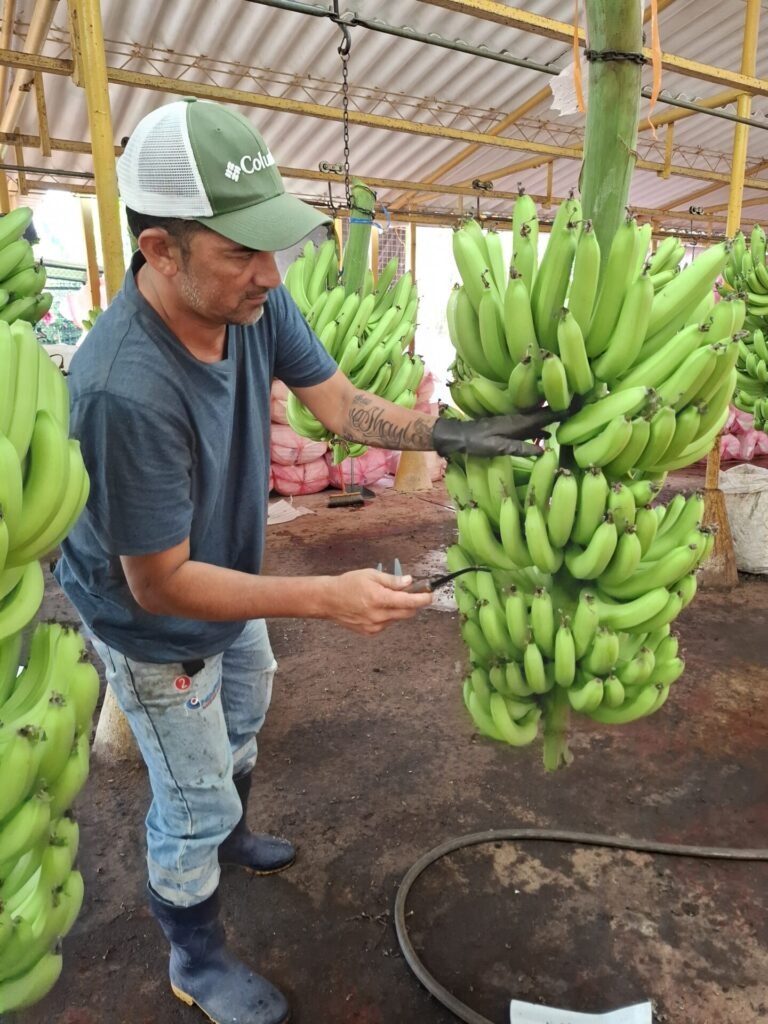
On the plantation, workers are organised into six teams of nine people. Banana bunches, grouped in sets of 23, are pulled along overhead rails to the packing station using a harness secured around the workers’ waists.
With temperatures often reaching around 35°C, the physical effort required from these teams is considerable.
Delivered to the packing facility
2/7
The banana bunches are first graded and sorted according to size, ripeness, and seed colour. Remaining flower ends, outer coverings, and protective plastic sleeves are removed to prepare the fruit for washing and the next stages of processing.
Cleaning
3/7
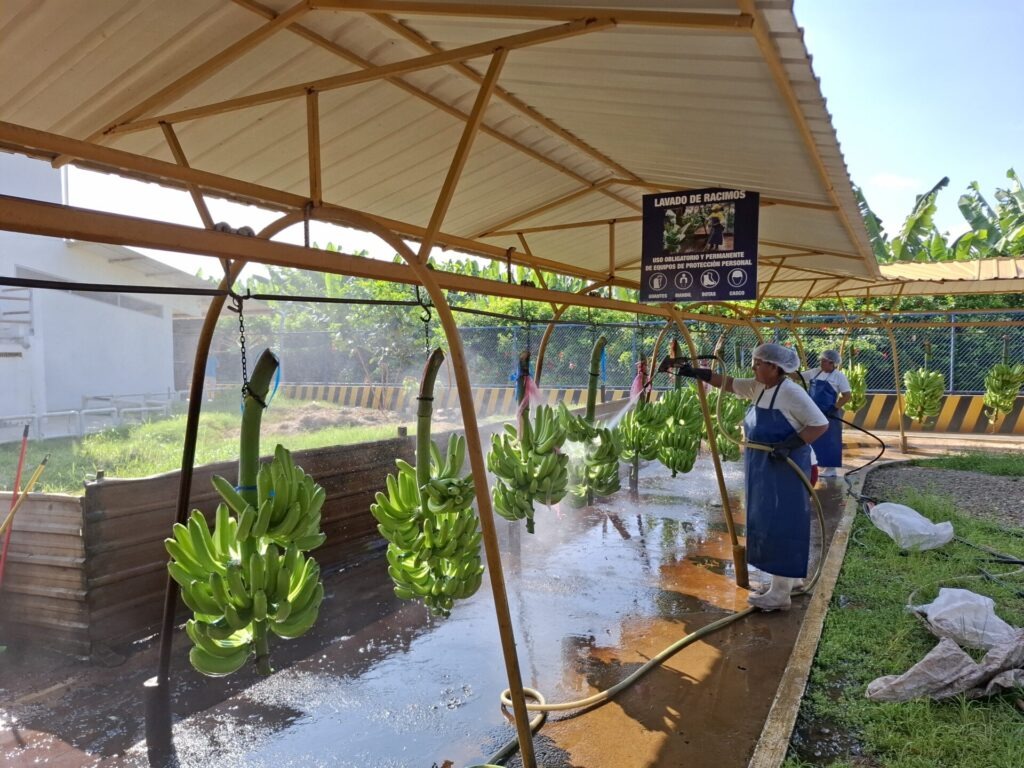
The bananas are sprayed with clean water to remove impurities and small pests, such as scale insects, as well as dust and any remaining residues.
Sorting and preparation according to destination
4/7
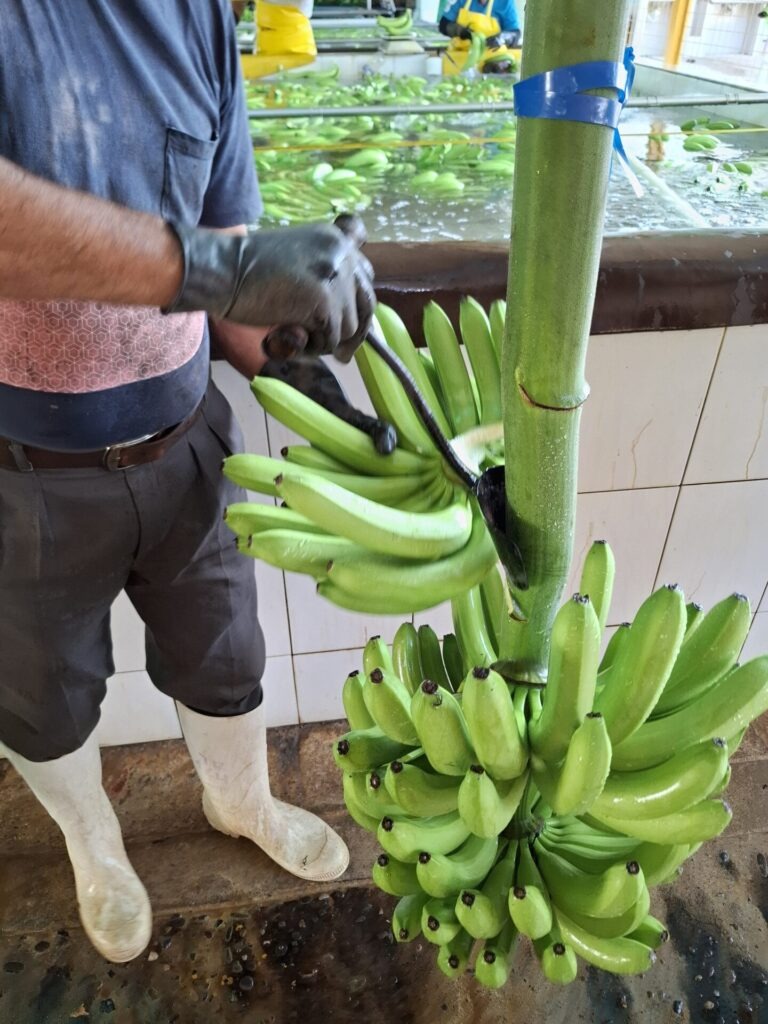
Bunches destined for the fresh market are dipped into tanks, then cut into “hands” of 4 to 7 bananas. Each hand is then weighed, fumigated, labelled, and packed into boxes ready for shipment.
Bananas that do not meet size, shape, or colour standards—being too large, misshapen, or blemished—are set aside for industrial processing. They account for between 5% and 16% of the harvest. These fruits are then sent to a processing plant to be turned into fruit purées, helping avoid waste and giving bananas a second life.
Transport to the processing factory
5/7
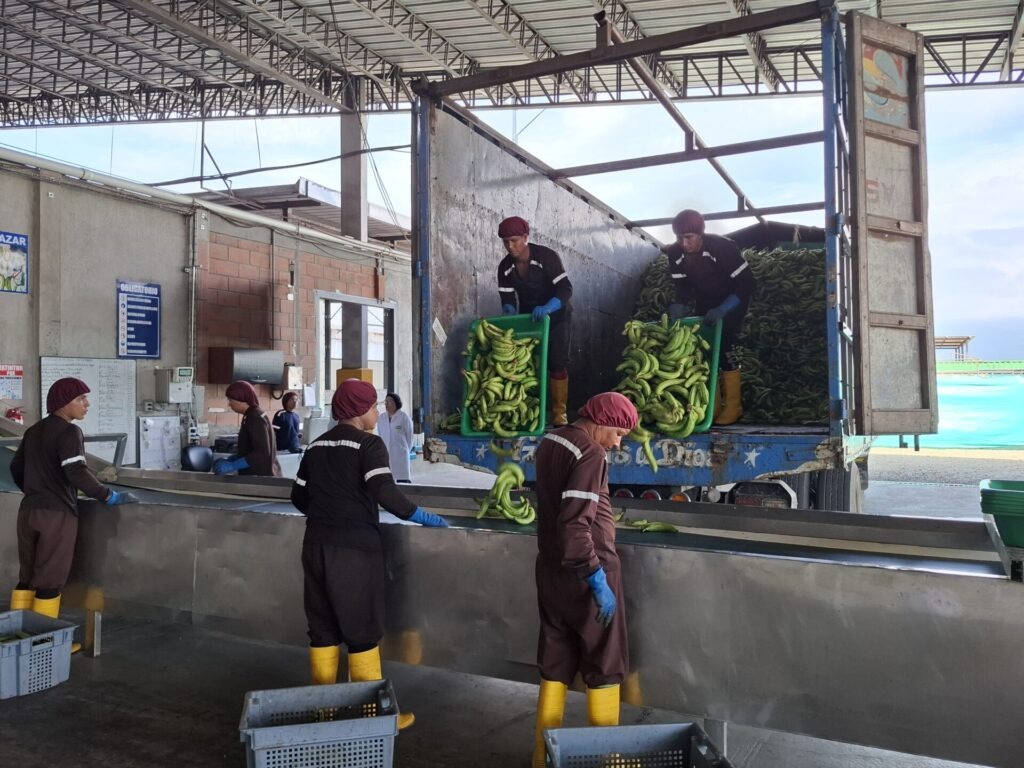
The rejected bananas are gathered into crates and then transported to the processing plant.
Peeling and processing into puree
6/7
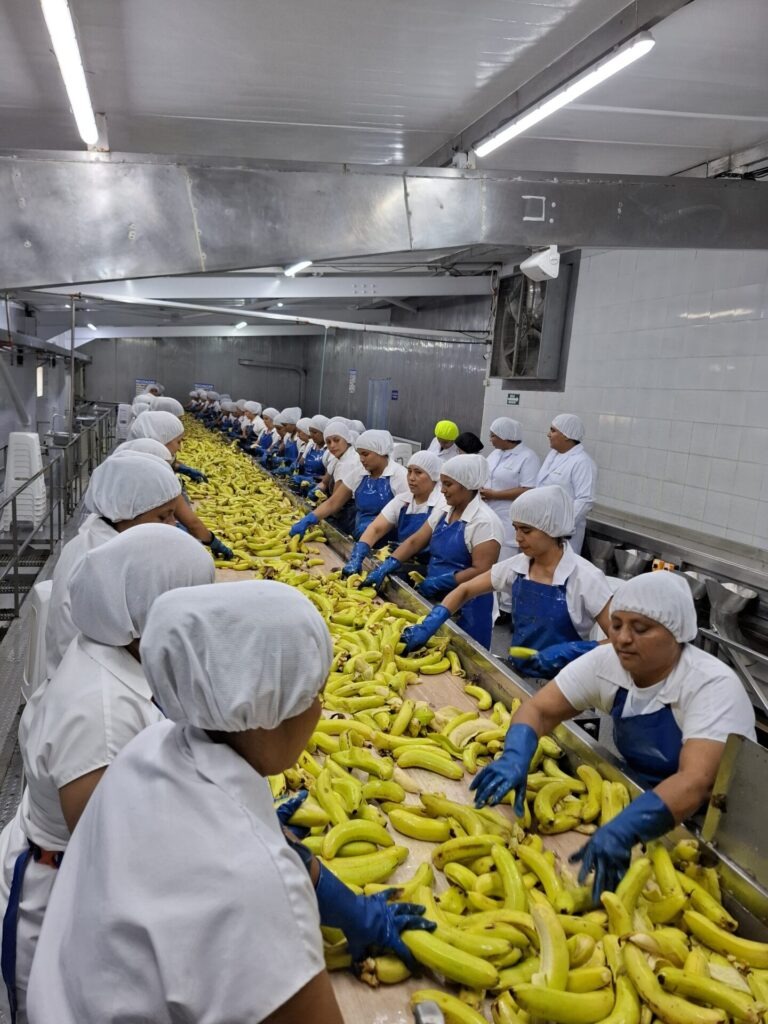
Once delivered to the plant, the bananas are manually peeled in a dedicated workshop by a team of around forty women. The most experienced workers can process up to 60 bananas per minute, showcasing remarkable speed and expertise.
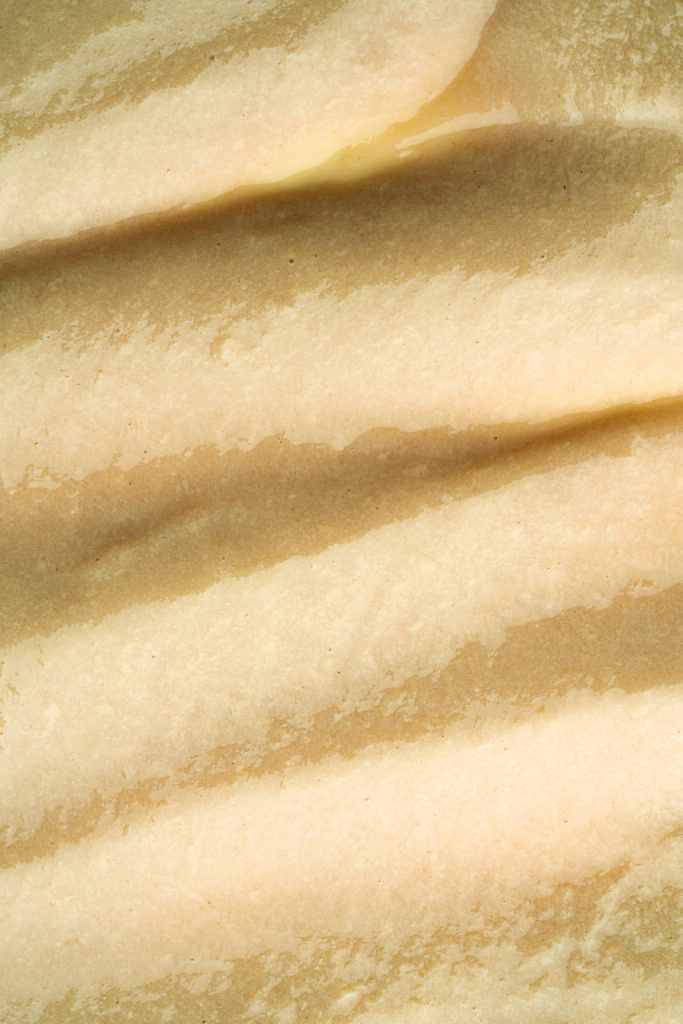
The peeled fruit is then deseeded and blended into a smooth purée, ready to be shipped to Les vergers Boiron for use in the production of our products.
Receiving, recipe formulation, and packaging into trays
7/7
Upon arrival, the raw material is received by the Vergers Boiron teams, who develop a tailored recipe designed to preserve the fruit’s full natural flavour and quality. The resulting purée is then packaged into trays, ready to be used in our products.
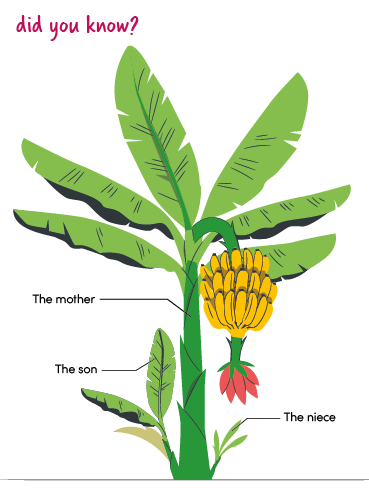
The banana plant reproduces through suckers that grow around the main plant. A strong sucker called the “son” is kept to replace the mother plant, along with a third sucker called the “niece” as a reserve. The mother plant produces fruit only once. After harvest, it is cut down, the “son” takes its place, and a new sucker appears to ensure continuity. In this way, the production cycle continues naturally.