
In celebration of World Sustainable Gastronomy Day, observed every year on June 18, Les vergers Boiron has chosen to extend this commitment far beyond a single day. Because sustainable gastronomy goes beyond what is served on our plates: it begins in the orchards, continues in the kitchens and labs, and comes to life through the techniques and expertise of culinary professionals.
From June 15 to 21, 2026, we invite you to join us for a week of exclusive content created by our international Pastry Chefs. A full week dedicated to sharing our vision of pastry: demanding, creative, indulgent, and deeply inspired by nature.
Recipes, tips, videos, and insights centered around key themes will shape this edition: waste reduction, 100% plant-based pastry, no-bake techniques, creations with no added sugar or colors, upcycling, and more.
Stay tuned!
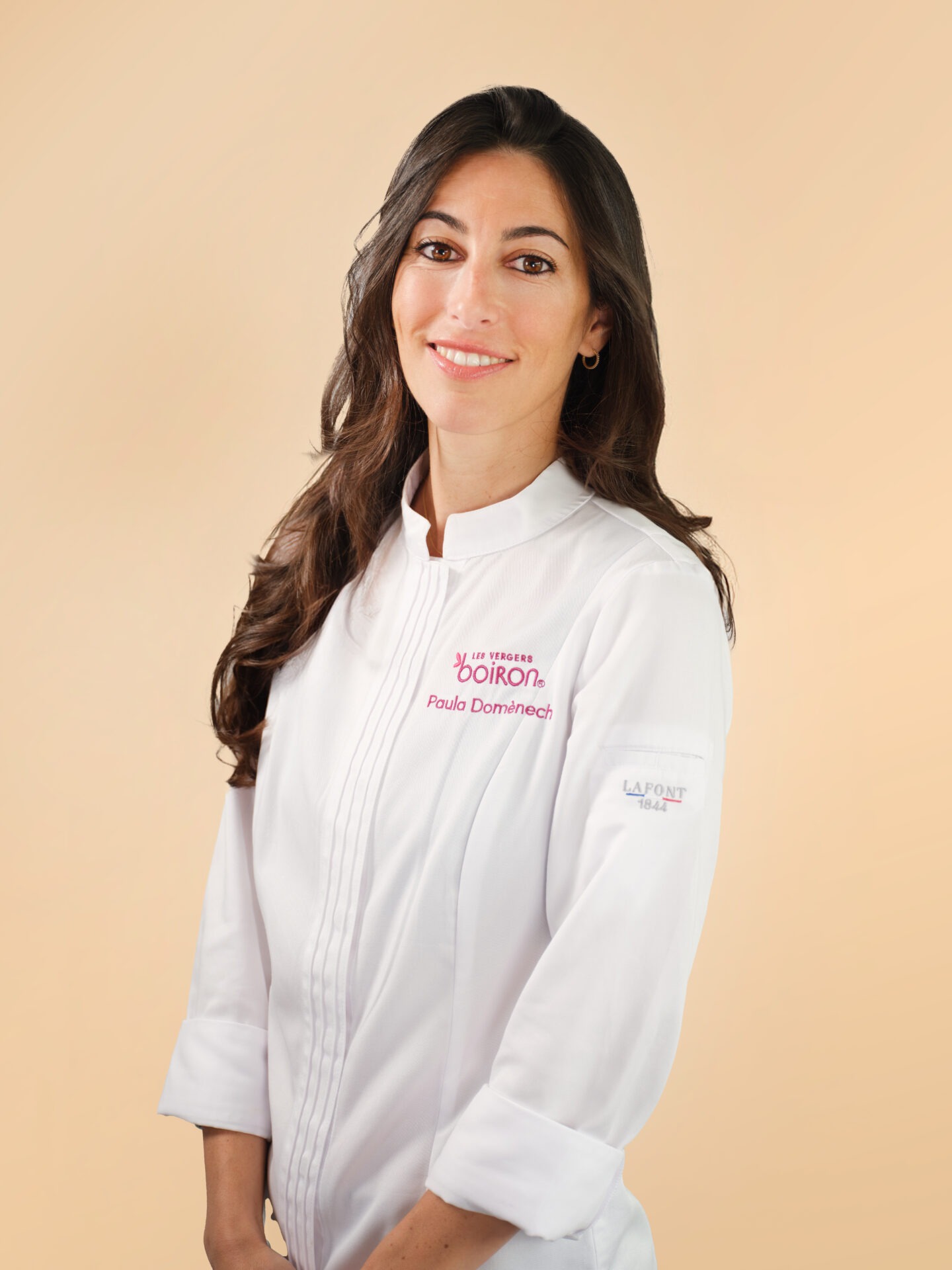
Paula Domènech, Iberian Peninsula Chef Les vergers Boiron
Low-Sugar recipe
« Removing sugar is not simply about taking it out of a recipe: you have to rebuild balance, texture, and indulgence in a different way. This approach requires exploring the potential of sweeteners, their specific characteristics, their interactions, and the way they can reveal or transform flavors. I also experimented with new ingredients, bolder pairings, and different techniques to preserve enjoyment while creating lighter pastries. »
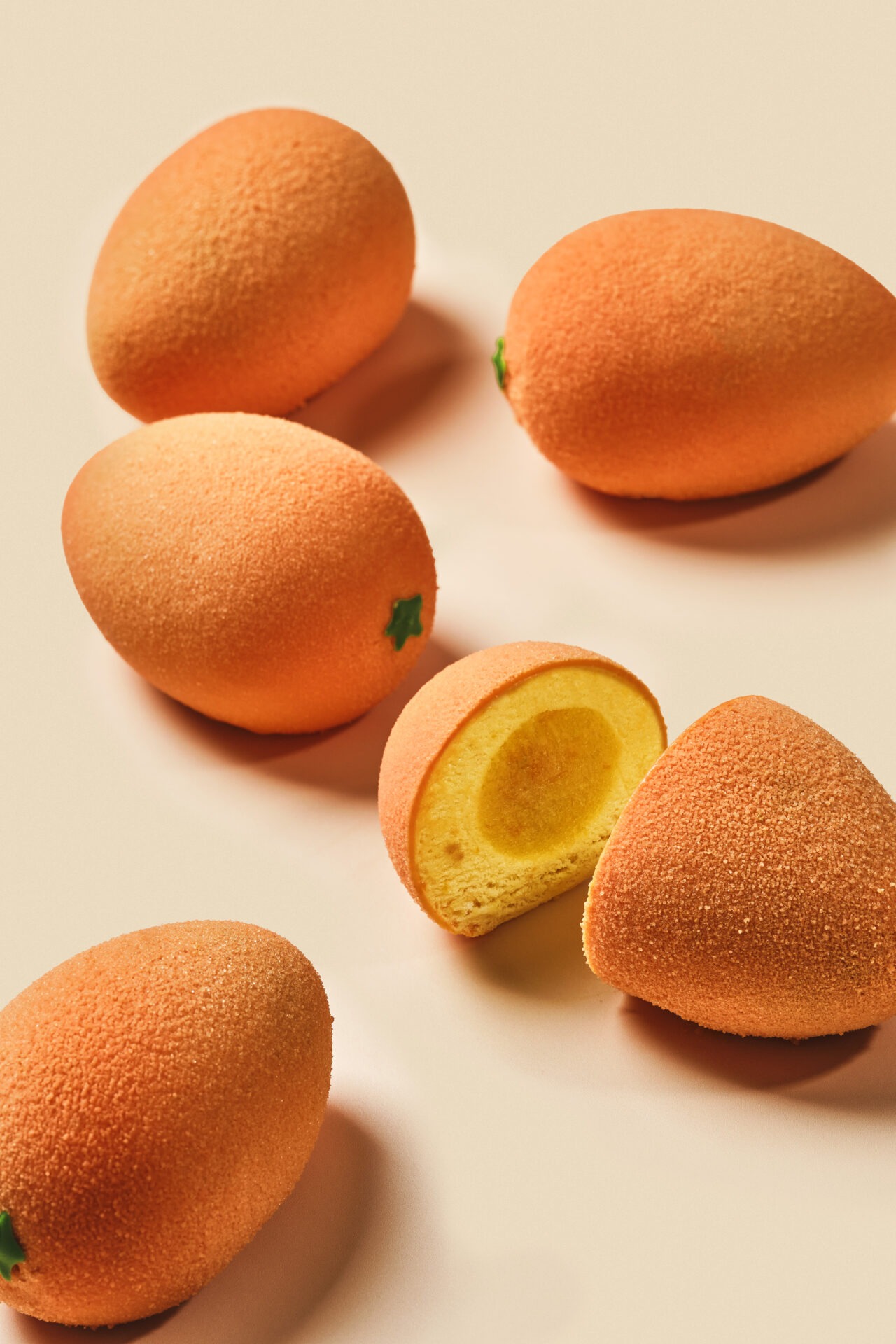
3 facts about Low-Sugar Recipe
- From a sensory perspective, it requires rethinking flavor balance: enhancing fruit acidity or the crunch of nuts, for example, can compensate for reduced sugar without sacrificing taste.
- There are no “good” or “bad” sweeteners: each one has its own functional properties and characteristics, making it more or less suitable depending on the desired application.
- Have you heard of these sweeteners? Native inulin, oligofructose, trehalose, and allulose.
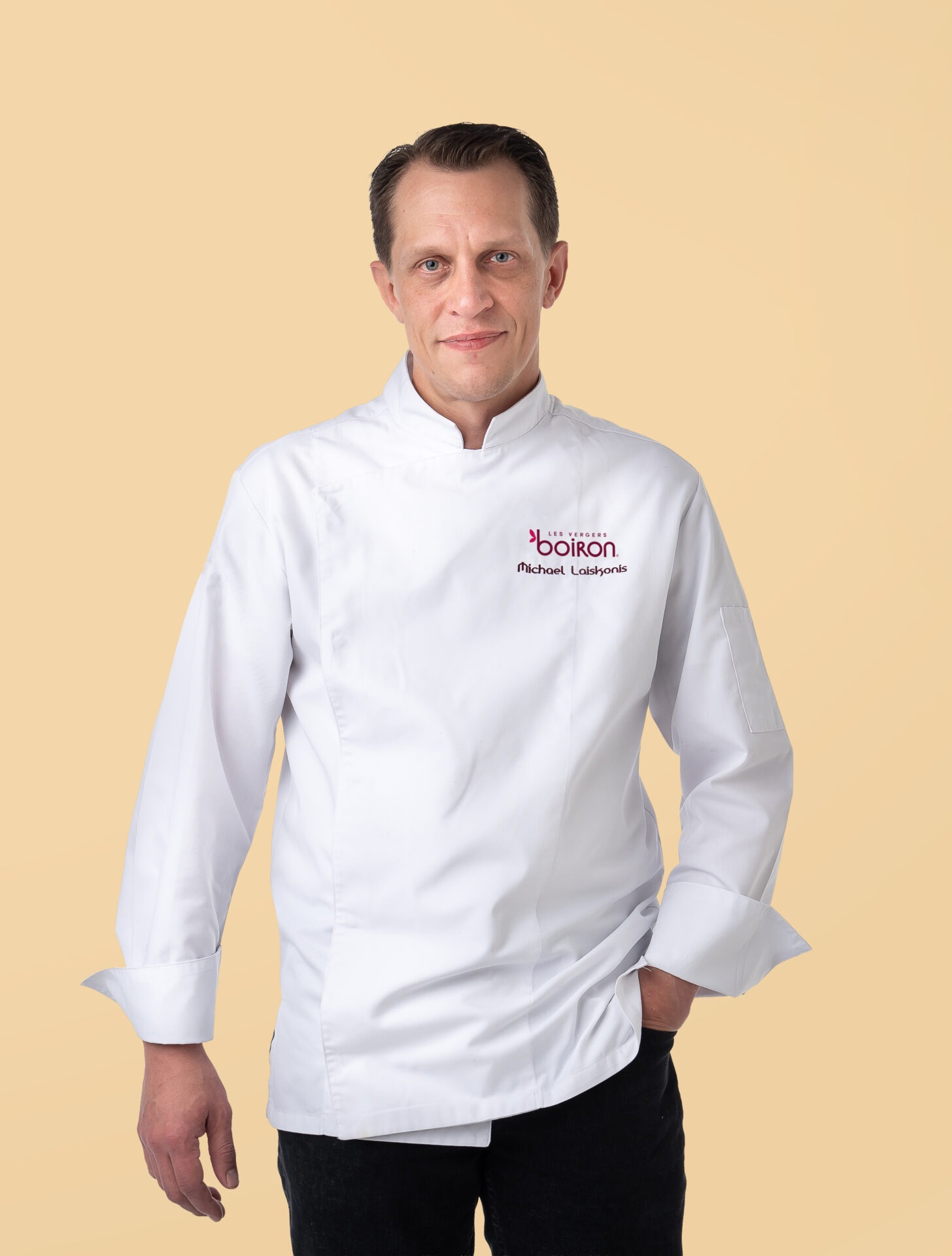
Michael Laiskonis, culinary Director, Boiron Americas
Waste reduction
« Behind every product and by-product often lies an untapped aromatic or technical potential. This approach pushed me to rethink the overall organization of production and to create connections between recipes so that nothing is truly wasted. I learned to stop thinking recipe by recipe, and instead adopt a more systemic approach, considering the entire production as a coherent ecosystem. In the end, this challenge became a true source of inspiration. »
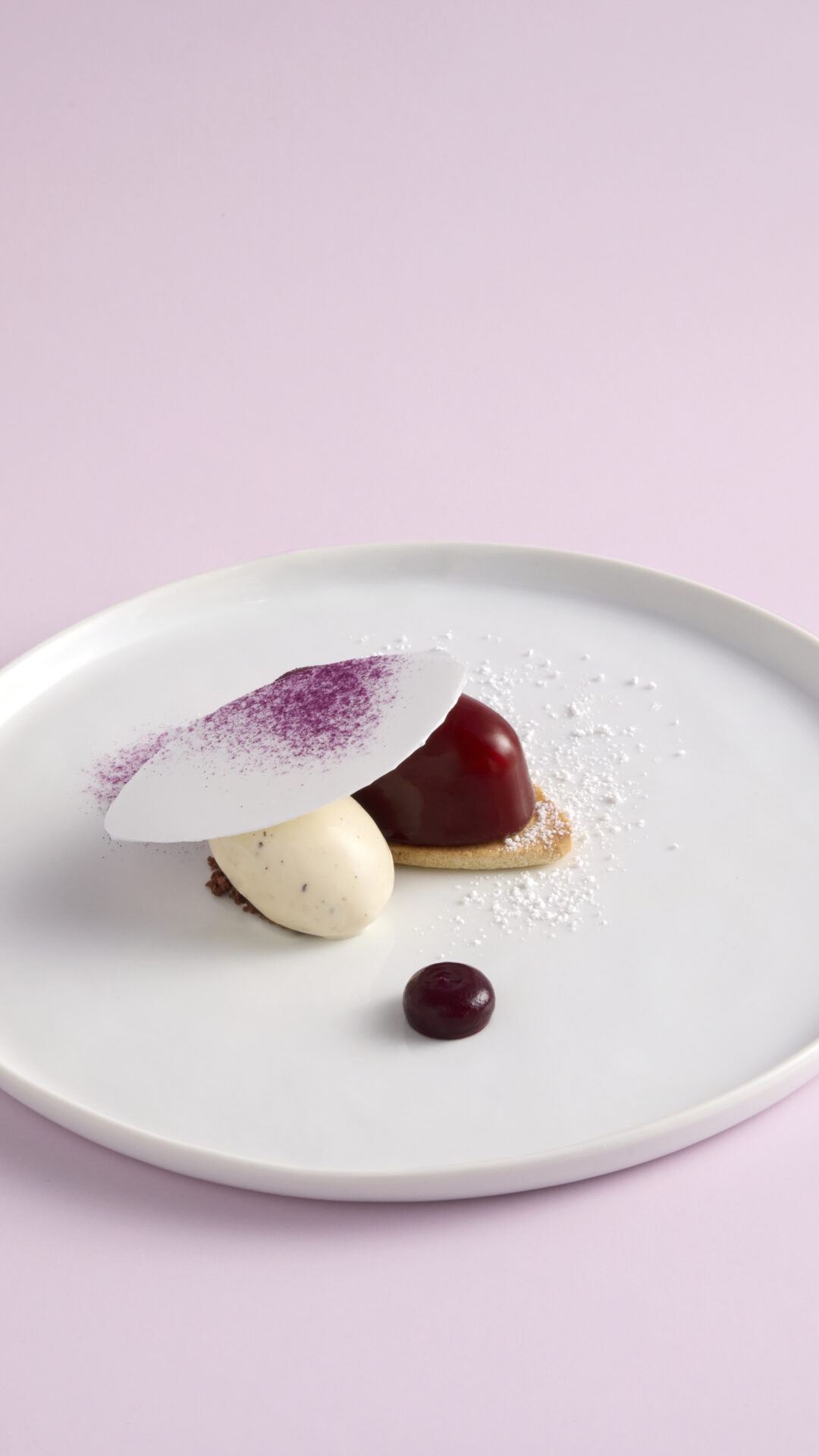
3 facts about Waste reduction
- This approach directly impacts the organization of production in the kitchen. It requires rethinking workflows, preparations, and coordination between recipes.
- Upcycling is not just about reusing “waste,” but about changing how we see raw ingredients. What was once considered a loss can become a full-fledged ingredient, bringing flavor, identity, and uniqueness.
- Zero waste also means designing recipes that fit real production constraints. This involves multifunctional, reproducible preparations that are easy to reuse or adapt.
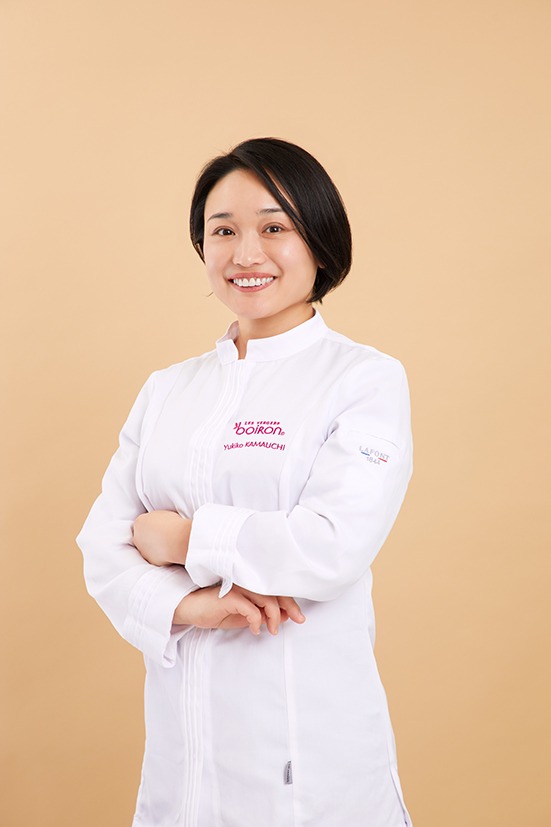
Yukiko Kamauchi, Japan chef Les vergers Boiron
Naturalness
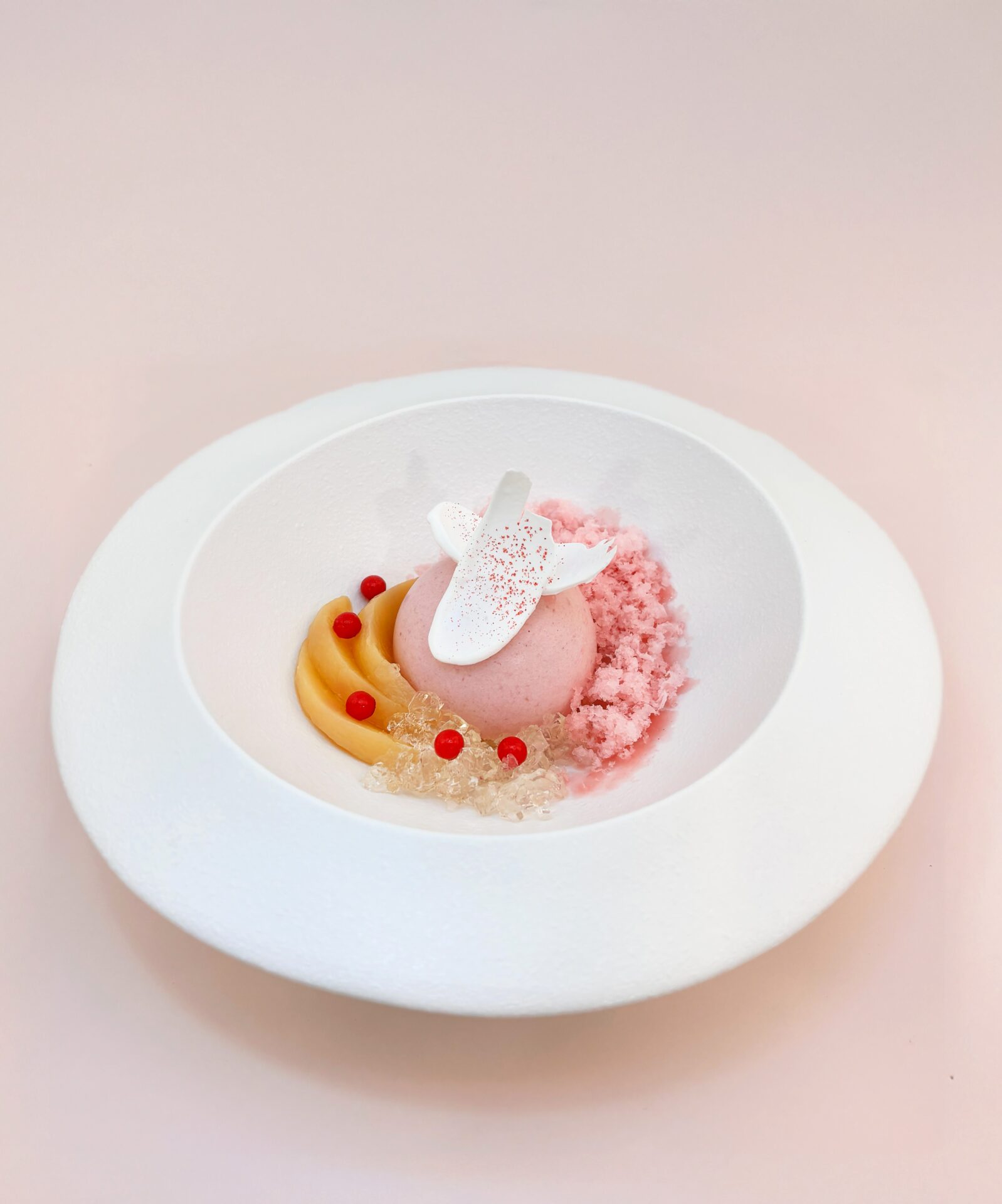
« Naturality is a standard I like to set for myself, as it allows me to focus on what ingredients have to offer at their very best: their color, flavor, texture and intensity. This approach translates into recipes free from unnecessary ingredients, where each component serves a precise purpose and contributes fully to the dessert’s identity. Throughout my creations, I have learned to use fruits, herbs and spices as true technical tools, capable of bringing visual intensity, flavor balance and aromatic complexity. They are invaluable allies in promoting naturality. »
3 facts about naturalness
- Naturality is based on highlighting the intrinsic qualities of ingredients. Fruits, herbs, teas and spices can naturally build color, flavor and texture without the need for artificial additives.
- Preserving naturality requires genuine technical expertise. Cooking methods, pH levels, oxidation and ingredient pairings all directly influence color stability and the aromatic expression of fruits.
- A natural recipe is not simply the result of carefully selected ingredients. It also depends on the balance between those ingredients and the technical interactions that occur between them.
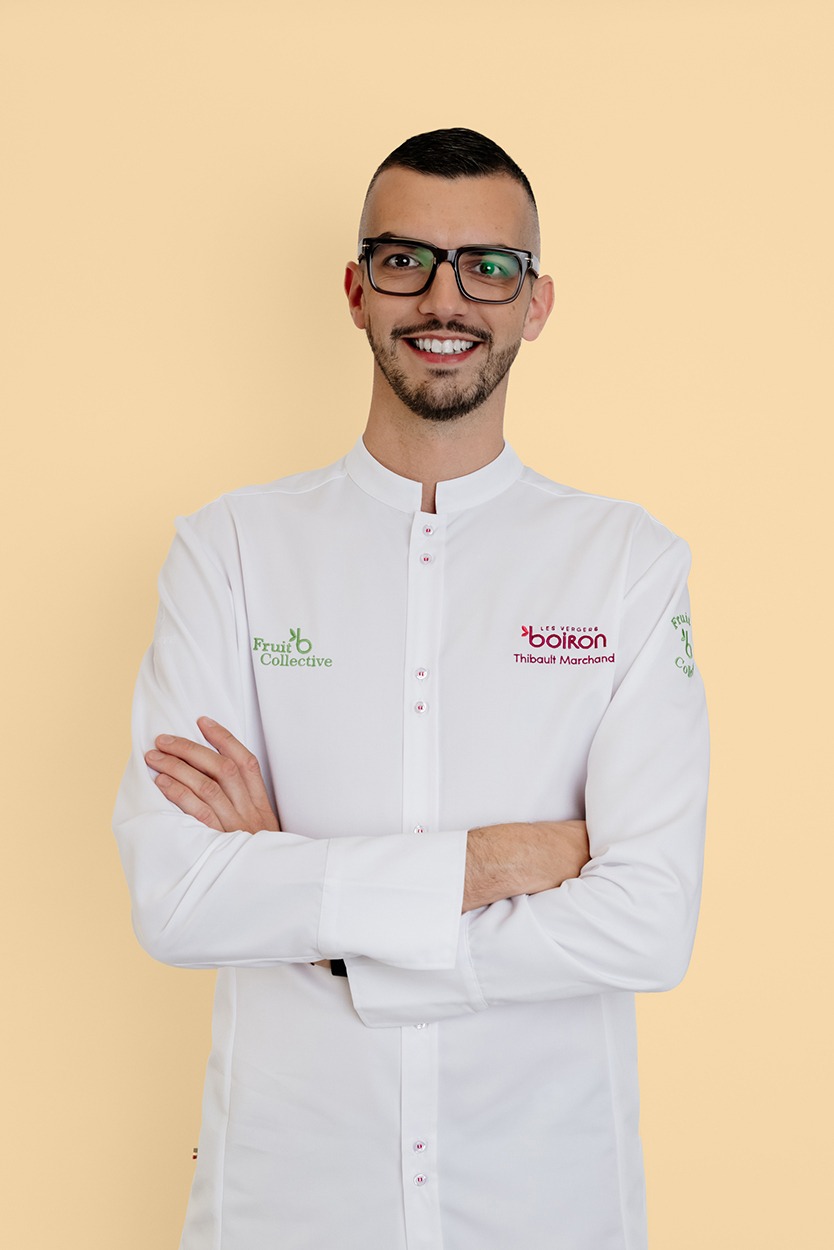
Thibault Marchand, corporate Chef Les vergers Boiron
Plant-Based
« By exploring plant-based pastry, I opened the door to an entirely new world, where every ingredient becomes a source of inspiration and every pairing an opportunity to innovate. I had to completely rethink my recipes by experimenting with new textures and flavors. I learned so much throughout the process, and I have to admit that my shopping lists quickly expanded with spices, seeds, plants, and forgotten flours I had never used before. »

3 facts about Plant-Based Pastry
- It represents far more than an alternative to animal-based ingredients. It inspires a whole new way of creating.
- It responds to evolving guest expectations, with growing attention paid to the impact of food on living systems and the environment.
- It can be indulgent, generous, and full of intensity.
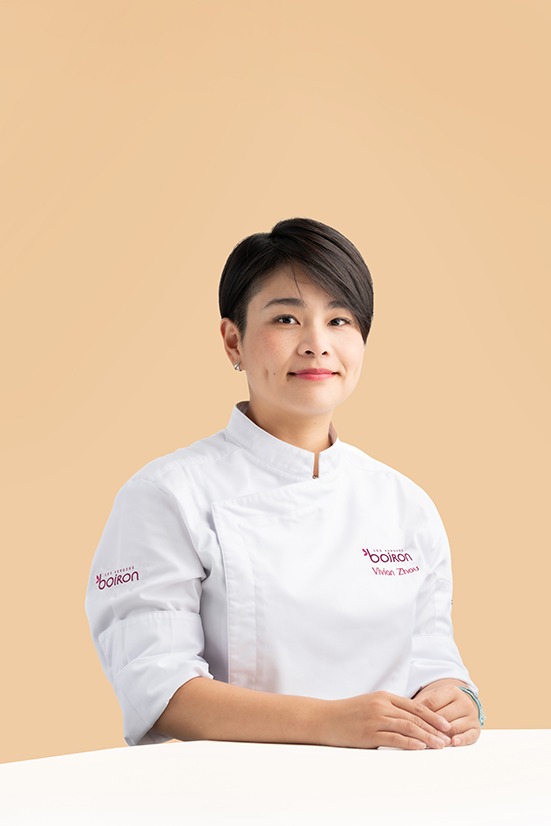
Vivian Zhou, China pastry chef, Les vergers Boiron
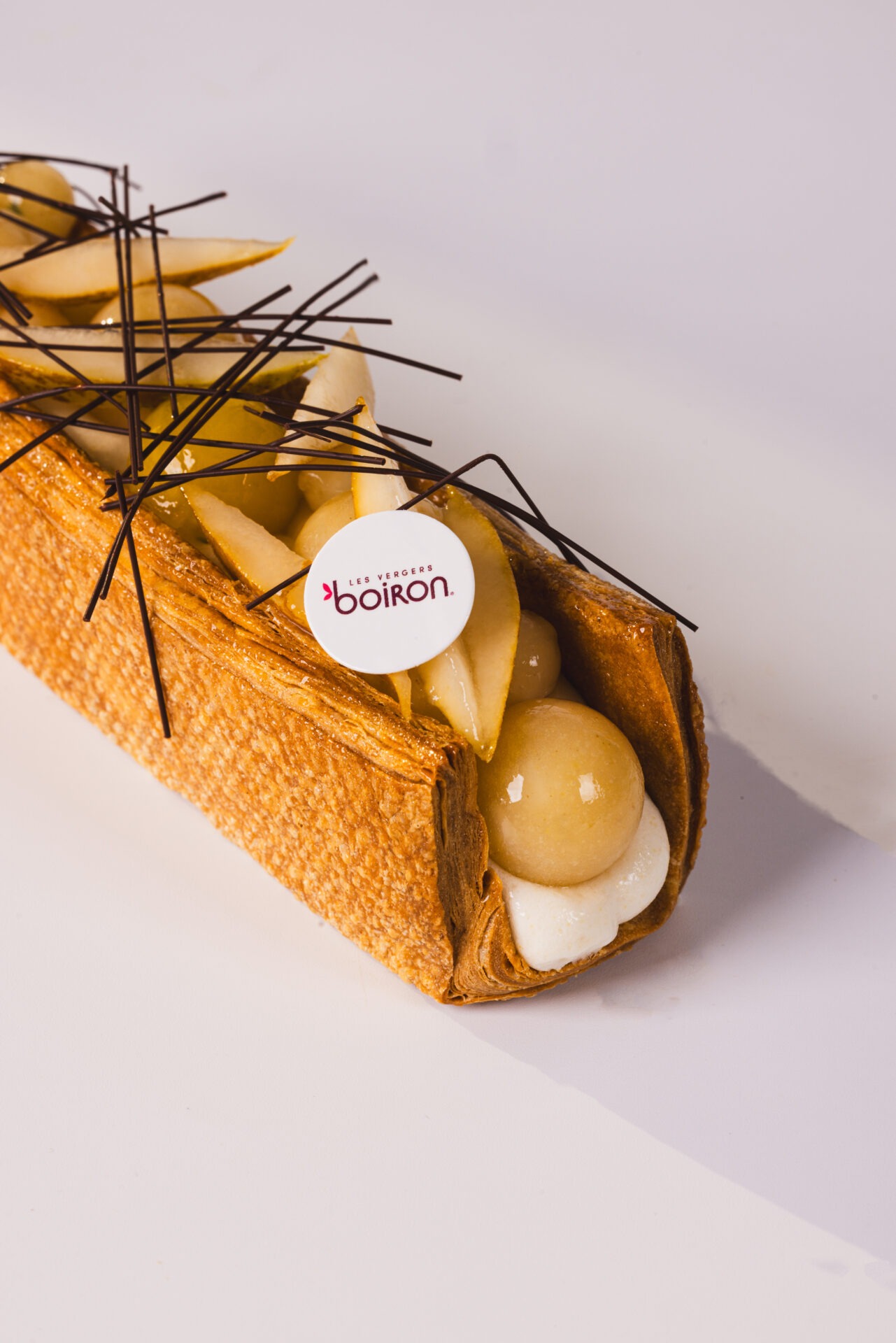
Upcycling of unsold products
« Every surplus, unused preparation, or excess can become the starting point of a new creation. But it needs to be anticipated and intelligently integrated into the organization of recipes. This approach requires rigor in planning and creativity in transforming what already exists. I have learned to adapt my recipes based on availability, giving products a second life without ever compromising on quality or indulgence. A method that is also highly appreciated by guests! »
3 facts about unsold products
- The goal is not only to reduce waste, but also to explore new flavor and technical possibilities. Elements that are usually discarded can become real sources of creativity.
- Unsold products, when discarded, represent a loss, but when repurposed they can improve margins and reduce costs. By integrating them into adapted offerings, they become a real economic opportunity.
- A consistent anti-waste approach also strengthens the pastry’s brand image. It reflects a more creative and sustainable approach to raw ingredients.
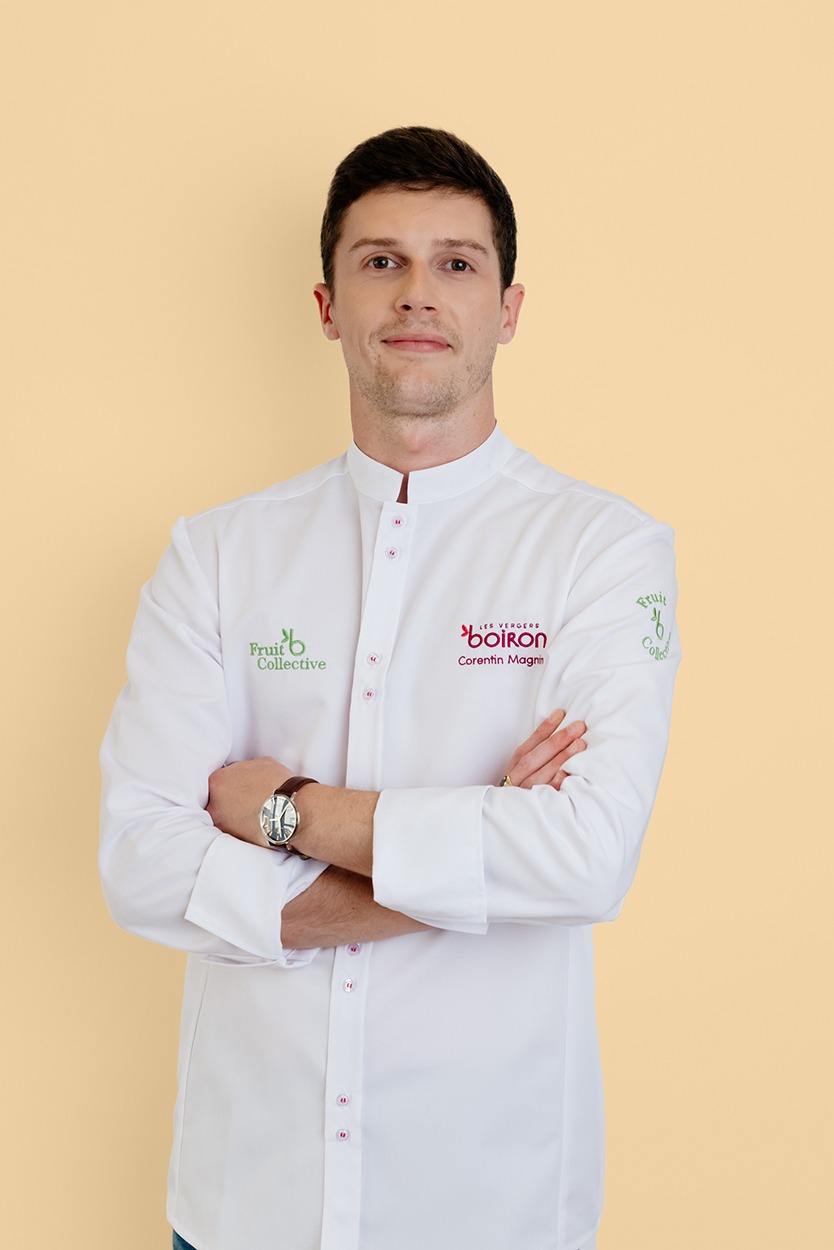
Corentin Magnin, France chef Les vergers Boiron
Traceability
« Many people think traceability is simply about knowing the origin of an ingredient. To me, it’s about understanding the story behind each element: the land it comes from, the women and men who grow and transform it, and the choices that shaped its production. This approach pushes me to value gustatory quality just as much as the coherence of sourcing. By creating a more direct connection with producers and raw materials, each dessert becomes meaningful and tells a story that goes far beyond the act of tasting. »

3 facts about traceability
- Traceability helps us better understand the raw materials we use every day. Knowing their origin, production methods, and the people behind them strengthens the coherence of the choices made when creating a dessert.
- It fosters long‑lasting relationships between producers, suppliers, and artisans. It creates a dialogue that helps highlight craftsmanship, product quality, and transparency for our consumers.
- Working with available resources, seasonality, or a specific terroir allows us to imagine desserts that are sometimes more original and authentic.
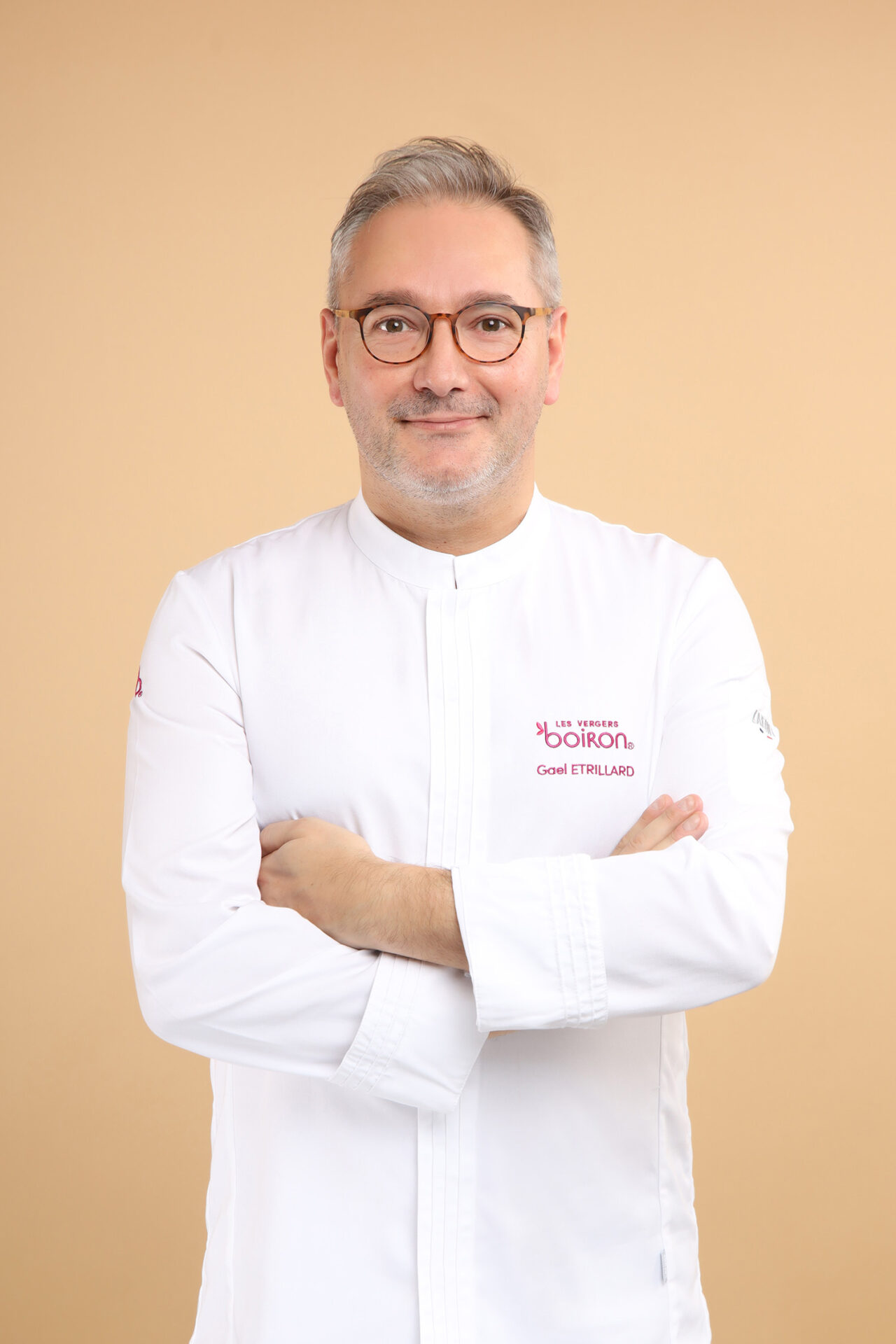
Gaël Etrillard, Pastry chef at Les vergers Boiron – Asia
Gentle Cooking Methods
« Rather than transforming an ingredient through heat, I try to guide it as carefully and accurately as possible in order to preserve its identity. This approach requires greater precision and technical mastery, but it allows me to retain the freshness of flavors, the integrity of textures and the natural richness of the ingredients. I enjoy moving beyond traditional cooking methods to give fruit a more central role. The pastry chef’s purpose is no longer to mask or alter an ingredient, but to reveal the very best it has to offer. »

3 facts about gentle cooking methods
- Gentle cooking helps preserve more of the ingredients’ natural qualities. Flavors remain cleaner and aromas stay closer to their original expression.
- Working with little or no heat creates textures that offer sensory experiences different from those achieved through traditional cooking techniques.
- Gentle cooking can reduce the energy required for transformation while helping to preserve the nutritional qualities of ingredients (including vitamins, minerals and antioxidants).
Find all these recipes on our Instagram account !
Follow us this week to discover live behind the scenes, highlights and events of the Sustainable Gastronomy Week.